|
ANIMAL
ITEMS:
Alaska Carvings & Travels
Animal Carvings-Other
Bug & Crab Specimens
Gator Items
Gem Animals
Parasite
Wood Carvings
Shark Items
Tagua Nut Carvings
Teak Carvings
JEWELRY
ITEMS
Amber Items
Brooches
Cameos
Czech
brooches
Dichroic Glass
Jewelry
Earrings
Eyeglass Holders
Fairy Stone Crosses
Hatpins
Humor Pins
Key chains
Maori Fish Hook Necklaces
Music
Jewelry
Necklaces
Opals &, Ivory Items
Pendants
Rings
Titanium
Jewelry
Vintage
Jewelry
FOSSIL ITEMS
Cave Bear Fossils
Fossils-Others
Poop Fossils
Poop-Moose & Deer
Fossil Shark Teeth
CLOSEOUT
SALES:
Marbles
Closeout
Sales-Other
ROCK ITEMS
Meteorites
Rocks & Mineral-Other
OTHER COOL
STUFF FOR SALE
Alien Gifts
Gemstone
skulls
Indian
Artifacts
Medallions & Coins
Swords,
Daggers, Knives
The Weirdest
Zoo
books & Books
HUMAN
INTEREST
About Us
Cool
Customers
Latest
Travels
Newsletter
Support Our Troops
Tina Memorial
Zany & Fun
FOLLOW us on TWITTER for
special DISCOUNTS

| |
You Are On: Fossils Page 1
| TABLE
OF CONTENTS
FOSSILS
Page 1 (You
are on page 1): How Fossils Form;
T Rex wall mount and T-Rex dinosaur
key holder, Dinosaur Hadrosaur Eggs, Oviraptor 2 egg nest,
Dromaeosaurus
albertensis dinosaur skeleton cast,
Dinosaur bone & bone slices,
dinosaur egg shell fragments, dinosaur teeth, Living Fossil, packaged fossil
sets, thermometer-magnet, Fossil I.D. books, dinosaur carving, footprint
Click To Go To:
Page 2
Contents:
Alaskan: Woolly mammoth carvings and tusk ivory; South Carolina: Woolly
mammoth tusk pieces, leg bones, and teeth; Siberian: teeth,
tusk ivory, hair, photo gallery; Mastodon teeth & ivory; Gomphotherum
elephant tooth; ; Siberian dog teeth, Fox teeth, Woolly mammoth picture gallery
Page
3 Manatee, gator,
oreodont, bison, horse, barracuda, walrus, turtle, deer, fish vertebra, whale,
porpoise/dolphin, shark, ground sloth, marlin, drum fish, snake, sawfish, rhino,
camel, glyptodont, armadillo, tapir, ray, stingray, modern stingray barbs, porcupine fish, seal, llama,
ferns, orthoceras, shells
Page 4
AMMONITES from Eight Countries
Page 5
Cephalopod, Chinese & Wyoming
Fish fossils, Petoskey coral, crinoid, starfish, fossil bugs
Page 6
Fossil oosiks of seal, walrus; modern oosiks of raccoon, badger, river otter,
coyote, fox, pine marten; Ode to an Oosik; Fossil SIBERIAN Dog and Fox teeth
Page 7
Trilobites & trilobite matrix from Utah
Page
8 Brass
dinosaur
medallions, Dinosaur Picture
Gallery
Page 9
Aurora and Ocean Lakes FOSSIL FESTIVALS, and Fossil Identification Photos
Page 10
Virtual Tour of Dinosaur World--Plant City, FL, Dinosaur Photos
Page 11
Virtual Tour of the Rocky Mountain Dinosaur Resource Center in Woodland Park,
Colorado
Page 12 Virtual
Tour of the Page Museum (La Brea Tar Pit Fossils)
Page 13
Outreach Program-Auburn University Fossil Education
Page 14
Walking with Dinosaurs - Arena Spectacular - Virtual View

|
HOW
ARE FOSSILS FORMED & FOUND?
1. An animal dies. Fossils form best
if the carcass is covered quickly with sediment (water and mud).
2. The flesh rots away, and the bones are
slowly covered with layered sediment.
3. "Permineralization" occurs if
some or all of the original material remains, but has been strengthened by
minerals that were dissolved in the water that soaked into the bony
structure.
4. "Petrification" occurs if
water that contained minerals soaks into the pores of the bony structure,
entirely replacing them with minerals.
5. Weathering. Earth movements and/or
erosion, cause the fossil to become exposed.
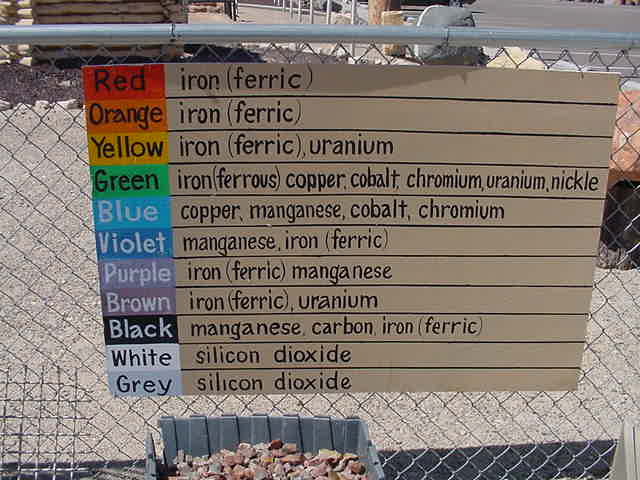
Whatever COLOR of the minerals in the sediment
that covers the animal, that is the color the fossil will become!
Here is a chart that will identify the colors of the minerals:
|
| FOR
THE BUDDING PALEONTOLOGIST IN YOUR WORLD, OR FOR ANYONE CURIOUS ABOUT THE
MICRO-WORLD
Here's Glenn and Heidi's favorite tip:
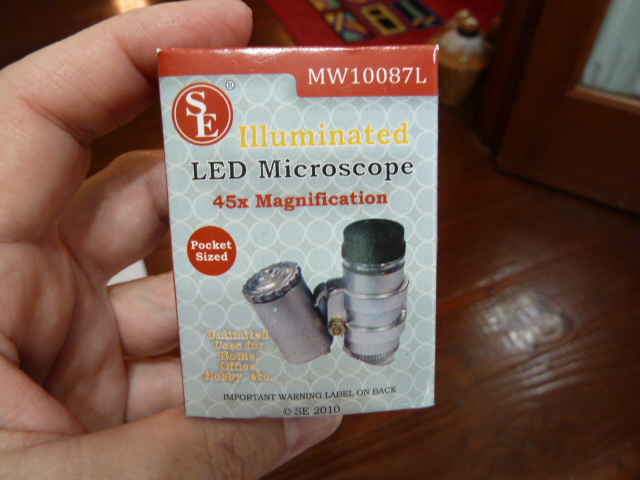
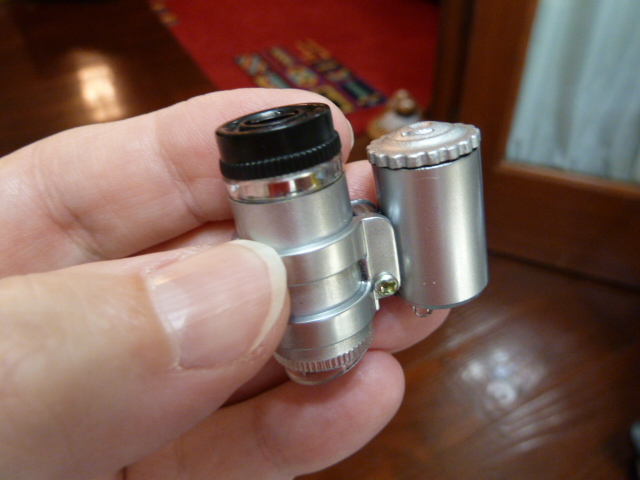
BUY A MINI MICROSCOPE, Scientist quality!
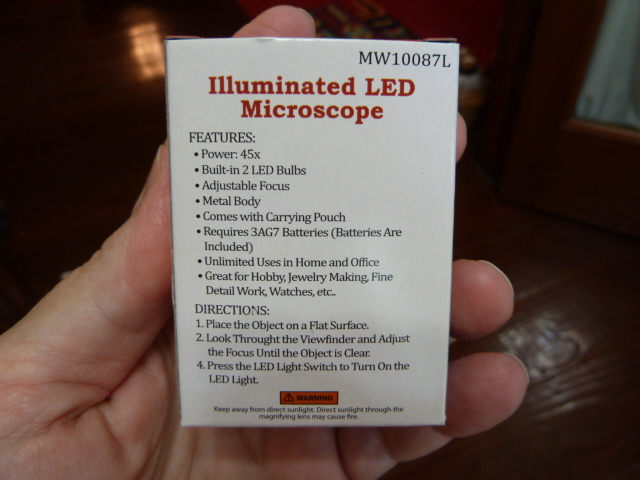
45x magnification ultraviolet LED Illuminated pocket microscope with
storage case. UV light can be used for close inspection of: gems,
minerals, fossils, tiny shark teeth in jaws, bugs, in short-anything in
the natural world you are curious enough to want to see up close.
Requires 3AG7 batteries (included);

#MICRO-1
$8 ea. (28 available)
|
| GENUINE
DINOSAUR
EGGS |

#F-1-A Single Hadrosaur egg on matrix,
measures 6.5" long, 5" wide, 5" high, and has a LARGE
circumference of 19". It weighs 7.75 pounds. This size
puts it in the top 4% size for this species. Therefore, we know it
was laid by a fully grown, mature female who had already reproduced during
previous breeding seasons, possibly an alpha female. This specimen
is in better-than-expected condition, ranking 8.0 Choice on a scale of 1
to 10. $425 SOLD |

#F-1-B Double Hadrosaur egg (duo)
specimen on matrix, measures 9" long, 6.5" wide, 5.25"
tall, with a circumference of 27". It weighs 15 pounds.
Quality ranks 7.6 on a scale of 1 to 10 due to symmetry, shape, posture,
matrix, size, coloring, shell texture, and degree of shell
coverage. SOLD |
|

#F-1-C RARE SIX EGG NEST, measures
14" long, 12.5" wide, 7.75" tall, with a circumference of
3.7 feet (44.75") around. It weighs 63 pounds. A special
acquisition for us, one that we are offering for sale to that special
collector that will appreciate it as we do. $2445
AVAILABLE
|
Genuine Hadrosaur Dinosaur
Fossil egg specimens above are Hadrosaurid, Late Cretaceous (84-71 million years old),
collected in the Xixia Basin, Henan Province of China. Fossil eggs are found
in China, the Badlands of the Western U.S., and in Patagonia. The egg becomes covered with soil relatively
quickly after being laid, which protected it from scavengers, climate and
oxygen. Ground water flowing through the sediment passed through the egg
and allowed minerals to precipitate into the egg, which eventually turned it to
stone, though keeping its original shape (like petrified wood). It is
possible, but unlikely, that the bones of the embryo may be found inside, as it
may not have developed enough before its death. A special addition to any fossil collection!
|
|
  
One of our customers, Tom (on far left of second picture) brought this possible
dinosaur egg in to be examined by the Smithsonian fossil experts (Bob Purdy) at
the 2002 Ocean Lakes Fossil Fair in Myrtle Beach SC -
he suggested Tom take it to New York to the museum there for final verification,
but it passed their initial test! Cool!
|
| DROMAEOSAURUS
ALBERTENSIS cast |
| 11/6/10 Here's our new
"baby", a Dromaeosaurus albertensis dinosaur skeleton museum cast, measuring 6'9" long x 34" tall.
A superb specimen any museum or private collector would be pleased to
display.
We are proud parents to a
Dromaeosaurus albertensis (Therapod) dinosaur
cast (also called a "Drom") we acquired from a Minnesota
collector. The "baby" is 6'9" long x 34"
tall. Here is Glenn in our living room showing it off after it
arrived this morning and we reassembled it. The base is purposely
unfinished, the new buyer can spray-foam, papier-mache or fabric-cover
it as needed for exhibiting in its final resting place. Drom
will be
placed under Mrs. Cave Bear so we can still walk through to the kitchen,
truly a Monster Strait to walk each day.
Dromaeosaurus
was a genus of Theropod dinosaur which lived during the Late Cretaceous
period (middle late Campanian), between 76.5 and 74.8 million years ago,
in the Western United States and Alberta, Canada. The name means
"running lizard". It was a small carnivore, about 2 m (6.5 ft.)
in length and 33 pounds in weight. Its mouth was full of sharp
teeth, and it had a sharp "sickle claw" on each foot.


Close-up of feet - front, then back


#F-1-M
$12,000 plus actual shipping/insurance
costs
|
| OVIRAPTOR
DINOSAUR
TWO EGG NEST |
|
(GENUINE, NOT A
REPLICA)
OVIRAPTOR 70-88
Million Years Old
Weighs 11 pounds,
measures 7-1/2" long x 7" wide; eggs measure 7-1/4" long
each, x 2-3/4" wide
Oviraptor is a
genus of small Mongolian theropod dinosaur, first discovered by the
paleontologist Roy Chapman Andrews, and first described by Henry Fairfield
Osborn, in 1924. Its name is Latin for 'egg thief', referring to the fact
that the first fossil specimen was discovered atop a pile of what were
thought to be Protoceratops eggs, and the specific name philoceratops
means "lover of ceratopsians", also given as a result of this
find. In his 1924 paper, Osborn explained that the name was given due to
the close proximity of the skull of Oviraptor to the nest (it was
separated from the eggs by only four inches of sand). However, Osborn also
suggested that the name Oviraptor "may entirely mislead us as
to its feeding habits and belie its character". In the
1990s, the discovery of nesting oviraptorids like Citipati proved
that Osborn was correct in his caution regarding the name. These finds
showed that the eggs in question probably belonged to Oviraptor
itself, and that the specimen was actually brooding its eggs.
Oviraptor lived in
the late Cretaceous period, during the late Campanian stage about 75
million years ago; only one definitive specimen is known (with associated
eggs), from the Djadokhta Formation of Mongolia, though a possible second
specimen (also with eggs) comes from the northeast region of Inner
Mongolia, China, in an area called Bayan Mandahu.
When living, Oviraptor
was one of the most bird-like of the non-avian dinosaurs. Its rib cage, in
particular, displayed several features that are typical of birds,
including a set of processes on each rib that would have kept the rib cage
rigid. A relative of Oviraptor called Nomingia was found
with a pygostyle, which is a set of fused vertebrae that would later help
support the tail feathers of birds. Skin impressions from more primitive
oviraptorosaurs, like Caudipteryx and Protarchaeopteryx,
clearly show an extensive covering of feathers on the body, feathered
wings and feathered tail fans. A tail fan is also indicated by the
presence of a pygostyle in Nomingia, suggesting that this feature
was widespread among oviraptorosaurs. Additionally, the nesting position
of the brooding Citipati specimens implies the use of feathered
wings to cover the eggs. Given the close anatomical similarity
between these species and Oviraptor, it is highly likely that Oviraptor
had feathers as well.
Oviraptor is
traditionally depicted with a distinctive crest, similar to that of the
cassowary. However, re-examination of several oviraptorids show that this
well-known, tall-crested species may actually belong to the genus Citipati,
a relative of Oviraptor. It is likely that Oviraptor
did have a crest, but its exact size and shape are unknown due to crushing
in the skull of the only recognized specimen.
Oviraptor
was originally allied with the ornithomimids by Osborn due to its
toothless beak. Osborn also found similarities with Chirostenotes,
which is still considered a close relative of Oviraptor. In
1976, Barsbold erected a new family to contain Oviraptor and its
close kin, making Oviraptor the type genus of the Oviraptoridae.

#F-2 $3200 |
   
Annette, our customer from here in Myrtle Beach, brought in what
she believed to be a dinosaur egg, found in Arkansas near Lockesburg AR where a
few remains of the Arkansaurus fridayi have been found. Our local
chiropractor, Dr. Causey, x-rayed it for us..though there's no embryo, there is
a definite thickness around the edge that appears to be shell. We'll be
contacting the New York Museum to speak with a dinosaur egg expert there to get
authentication, if this is indeed what it is. An incredible find, if
so! Thanks for sharing, Annette!
| DINOSAUR
EMBRYO REPRODUCTION |
|
  
Dinosaur embryo in jar, 7"
lab specimen jar, 3" across; other two photos are what he looks like before
being put in the tea water, Latex, folks...fooled ya! Molded from the real
thing.
OUT OF PRODUCTION,
DISPLAY ONLY
|
LIVING
TRIOPS FOSSIL?
|
#F-4
Living fossil packet! This material contains eggs from
the tadpole Shrimp-Apus longicaudatus Le Conte (Triops) which dates back
to Triassic time (190 million years ago). It has a shield-like carapace
covering most of the body which makes it resemble a trilobite. The eggs
can survive long periods without water and through temperature changes and still
hatch as soon as rain produces a lake. Found only in the western
U.S. Add water and watch them hatch. Then let it dry and start all
over again!
(3 available)
$13.00 |
| Genuine
DINOSAUR
EGG SHELL FRAGMENTS

These dinosaur eggshell fragments are from a
SALTASAURUS dinosaur
egg, Late Cretaceous period . Rio Colorado Formation, Auca Mahuevo,
Patagonia, Argentina.
The word "Saltasaurus" is
occasionally spelled "Saltosaurus", even by palaeontologists.
Saltasaurus (which means "lizard from Salta") is a genus of
sauropod dinosaur of the Late Cretaceous Period. Relatively small among
sauropods, though still massive by human standards, it was characterized
by a diplodocid-like head (with blunt teeth, only in the back of the
mouth) and was the first discovered with small bony plates embedded in its
skin. The bony plates (a form of armor called osteoderms) have since
been found in other titanosaurids, and a crest of scutes has also been
discovered, running down the back of diplodocids. When the plates of
a Saltosaur were originally found, independently of skeletal remains, they
were assumed to be from an Anklysaurian, whose plates they
resemble.
A large Saltasaurus/Titanosaur nesting ground
was discovered in 1997, by Luis Chiappe and his team, near Auca Mahuevo, in
Patagonia, Argentina. The small eggs, about 11 to 12 centimeters (4
to 5 inches) in diameter, contained fossilized embryos,
complete with skin impressions (although there was no indication of
feathers or dermal spines). These eggs may have belonged to Saltasaurus.
Apparently several hundred females dug holes,
laid their eggs and then buried them under dirt and vegetation. This gives
evidence of herd behavior, which, along with their armor, may have been a
defense against large predators.
Size average is 1-1/4".
$8
each
|
#F-5-A |
#F-5-B |
|
|
| SET
OF TWO OR THREE pieces of fossil dinosaur egg fragments
$10 each set |
| |
#F-5-N
|
#F-5-O
|
#F-5-P |
#F-5-Q |
#F-5-R |
#F-5-S |
#F-5-T |
#F-5-U |
|
|
#F-5-X |
| FOSSIL
PACKS & SETS |
 |
#F-11
Great set! Specimens of
dinosaur bone, coprolite and eggshell fragment included with 4x magnifier and
prehistoric timeline! Generous-sized specimens are 1 or more inches
across.
|
$18.00 |
 |
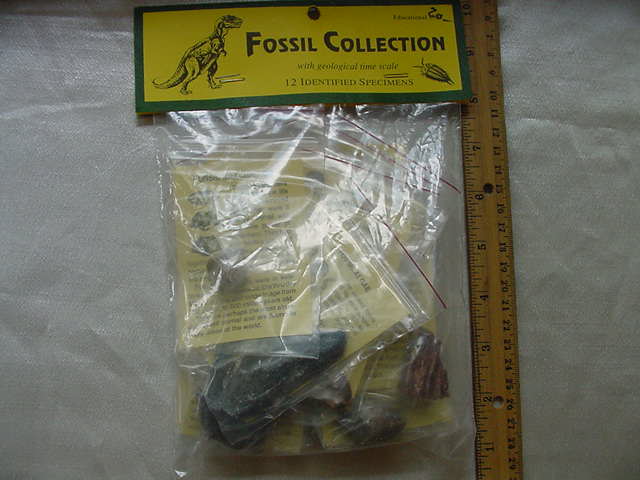
#F-12
Another great set! 12 identified specimens with information card on each,
including shell, algae, ammonite, crinoids, wood, gastropod and more!
Generous sized specimens are 1" or more. Geological time scale
included.
|
$27.00 |
| FOSSIL
I.D. BOOKS
(NOTE: Please see the "Zoobooks
and books" category for more I.D. books!) |

|
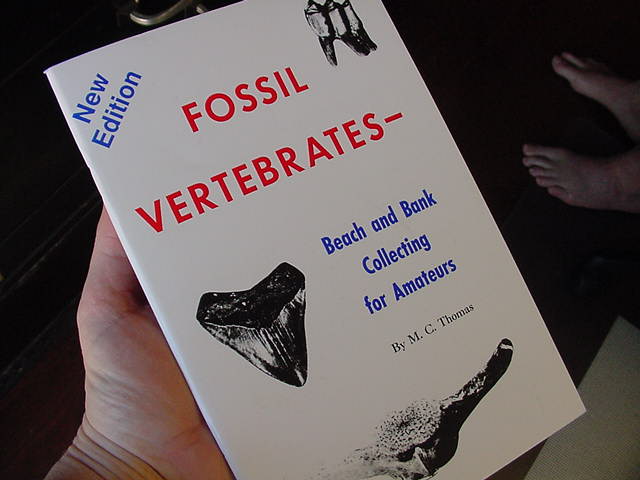
#F-20
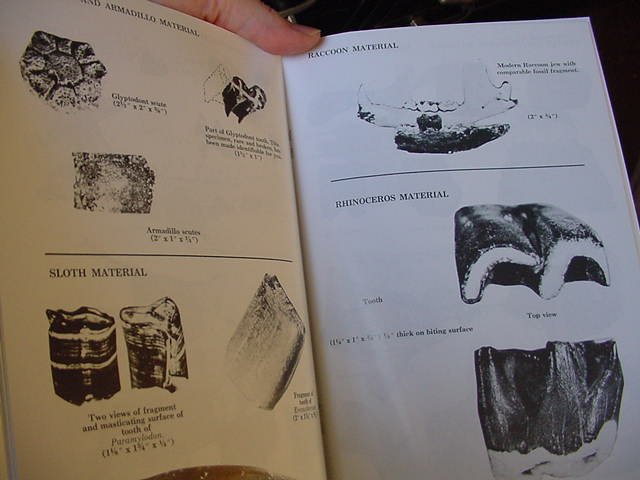
Great book, 2001 reprint of the "Fossil Vertebrates - Beach and Bank
Collecting for Amateurs" book by M.C. Thomas, 72 pages of instructions and
black-and-white photos of fossil fragments that can be found in the U.S. A MUST for
anyone that has started collecting fossils. (See the Book section for
MORE choices!)
|
$18.00 |


|
#F-21
Fossil book is full of illustrations and good basic descriptions
of invertebrate fossils, vertebrate fossils and plants, along with "what
are fossils", "how to collect fossils" and a survey of life era
by era. Pocket size is 6" x 4", 160 pages. Great for the
amateur fossil lover!
|
$10.00 |
| GENUINE
PTERANODON (flying reptile) hand CLAW
Pteranodon sternbergi , manual
ungual;
Excavated from the Lower Niobrara
Chalk, Lane Co., Kansas
Remember the outer claw is keratin
(fingernail material) that does not survive fossilization. So this
is the inner claw material that was preserved and found. Measures a
full 1" long x 1/2" widest x 1/16" thick. Comes with
display box as shown.
The Niobrara Chalk in western Kansas was
deposited on the eastern shelf of the Late Cretaceous Western Interior Sea
during Coniacian through early Campanian time, hundreds of miles from the
nearest land. The Pteranodon is a reptile but not a dinosaur. was
one of the largest pterosaur genera and had a wingspan of 3-6 meters
(9-20 feet). It was a toothless beaked creature, similar to those of
modern birds. |

#F-30 $325 SOLD |
| Real
SPINOSAURUS Dinosaur teeth
(sail-backed dinosaur featured in Jurassic Park
III)
Genus: Spinosaurus
Species: Aegyptiacus
Below is a photo of the fanged snout
of a Spinosaurus, great jaws about a foot long!
Period: Cretaceous (75-100 million years old)
Locality: Taouz, Morocco, Africa Fossil Formation:
Tegana Badder than the T.
rex, Spinosaurus was a gigantic predator that stalked Africa. His
head alone was almost six feet long! The whole animal measured up to
59 feet long, a dozen feet longer than the largest known T. rex and bigger
than the previous record holder among carnivorous dinosaurs, Gigantosaurus.
A full-grown adult stood 20 feet tall and weighed 9 tons. He had a
fearsome ridge, or sail, down its back, a croc-like jaw, and strong,
taloned arms to catch its prey. Spinosaurus was the LARGEST PREDATOR
OF ALL TIMES. Here's what they
look like in matrix as they're excavating them: 
Teeth
may have some repair but are stable |

#F-33-1
Small 1-1/8" long $22
|
 #F-33-2
1-1/8" long x 1/2" wide
$22
|

#F-33-3
1-1/4" long x 1/2" wide; $22
|
|
#F33-5
1-1/4" $22 |
#F33-8
1-3/8" $22 |
#F33-9
1-3/8" $22 |
#F33-10
1-5/8" $26 |
#F33-12
1-1/2" $26 |
#F33-13
1-3/8" $22 |
#F33-14
1-1/2" $26 |
 #F-33-17
1-5/8" $26
|
#F33-18
1-5/8" $26 |
#F33-19
1-5/8" $26 |
#F33-20
1-5/8" $26 |
#F33-21
1-5/8" $26 |
#F33-22
1-1/2" $26 |
#F33-23
1-5/8" $26 |
#F33-24
1-3/4" $30 |
#F33-25
1-3/4" $30 |
#F33-27
1-3/4" $30 |
#F33-29
1-7/8" $30 |
 #F-33-31
2" long x 7/8" $38
|
#F33-32
2" $38 |
#F33-33
2-1/16" $38 |
#F33-35
2-1/8" $38 |
#F33-36
2" $38 |
#F33-37
2" $38 |
#F33-38
2-1/16" $38 |
#F33-40
2-1/8" $38 |
#F33-41
2-3/8" $42 |
#F33-42
2-1/2" $42 |
#F33-45
2-1/8" $38 |
#F33-47
2-1/8" $38 |
#F33-51
2-1/8" $38 |
#F33-52
1-7/8" $30 |
#F33-53
2-3/8" $42 |
#F33-54
2-1/4" $42 |
#F33-56
2-3/8" $42 |
#F33-57
2-1/2" $48 |

#F33-58
Spinosaurus
tooth, 3-1/8" long x 1-1/8" widest, repaired
$78 |
| SPINOSAURUS
DINOSAUR TEETH IN MATRIX
$65 each |
#F-34-A 2" tooth in matrix 3-1/4 x
4 x 1" thick |
#F-34-B 1-5/8" tooth in matrix
2-5/8 x 2-3/4 x 7/8" thick |
|
T-Rex
thermometer/magnet
|
 |
#F-40
T-Rex thermometer / magnet,
1" x 5"
|
$9.00 |
 |
#F-40-1
T-Rex skeleton thermometer / magnet,
1" x 5"
|
$9.00 |
| GENUINE
DINOSAUR LEG BONE SLICES
From the Morrison Formation in
Utah. This formation covers 600,000 square miles over several
states, the most fertile source of dinosaur fossils in North
America. These bone specimens date back to the Jurassic Era, minimum
65 million years ago. It has a unique dot pattern, keeping its
original pattern though it petrified into stone as jasper and agate as it
fossilized. Comes with full information card.
Can be final polished or varnished with clear polyurethane or clear
fingernail polish with brush or spray to show the distinct dinosaur
bone pattern & color the best as a display item or as
jewelry.
All are solid & suitable for
lapidary/cutting for jewelry, or simply as they are for beautiful
prehistoric specimens for collectors. Cut flat front & back
unless indicated
|
 #F-41-B
1-1/4 x 3/4" $4
|
|
#F-41-G
1-5/8 x 7/8" $6 |
#F-41-O
1-1/2 x 7/8" $6 |
| |
#F-41-Y
1-1/4 x 1" $6 |
#F-42-A
1-3/8 x 7/8", end piece $6 |
#F-42-B
1-7/8 x 3/4" $6 |
| |
#F-42-D
1-1/4 x 1" $6 |
#F-42-E
1-1/4 x 1-1/4" $6 |
#F-42-F
1-7/8 x 1", end piece $8 |
#F-42-G
1-7/8 x 1/2" $8 |
#F-42-H
1-3/4 x 1" $8 |
#F-42-I
1-7/8 x 3/4" $8 |
#F-43
2-1/8 x 1" $8 |
#F-43-A
1-3/4 x 1-3/4", end piece $8 |
#F-43-B
1-7/8 x 1", end piece $8 |
#F-43-C
2 x 1-3/4" $8 |
#F-43-D
1-1/2 x 1-1/4" $8 |
#F-43-E
1-3/4 x 1", end piece $8 |
#F-43-G
2 x 1" $8 |
#F-43-H
2 x 1" $8 |
#F-43-I
2 x 1-1/8" Nicely agatized $8 |
#F-43-J
2 x 1-3/4", end piece $8 |
#F-43-K
2-1/8 x 3/4" $8 |
#F-43-P
1-7/8 x 1-1/4" $8 |
#F-43-Q
1-7/8 x 1" $8 |
#F-43-T
2 x 1-3/8" $8 |
#F-43-U
2-1/4 x 1-1/4" $8 |
#F-43-V
2-1/4 x 1-3/8", end piece $8 |
#F-43-Y
2-3/4 x 1-1/4" $10 |
| |
#F-50
3-1/2 x 1-1/4" $10 |
#F-51
3 x 1-7/8" $12 |
#F-51-A
3-1/4 x 1-7/8" $12 |
#F-52
3 x 2 x 1/8" thick $12 |
#F-53
2-1/4 x 2" $12 |
#F-58 3-1/2
x 2 x 1/8" thick $14 |
#F-58-A
3-1/2 x 2" $14 |
#F-58-B
3 x 2-7/8" $14 |
#F-59
3-1/4 x 1-7/8" (great color!) $16 |
#F60-2
Rare red color, 2-1/2" long x
1-5/8" wide x 3/16" thick $10 |
#F60-3
Rare red color, 3-3/8" long x
3/4" wide x 1/8" thick $8 |
#F60-4
2-7/8" long x 1-7/8" wide x
1/4" thick $12 |
#F60-7
3-3/4" long x 1-7/8" wide x
3/16" thick $12 |
#F60-10
Top is slightly
rounded/convex, top of leg joint, 3-7/8" long x 2-1/8" wide x
3/8" thick $18 |
#F60-11
4" long x 2-1/2" wide x
3/16" thick $15 |
#F60-12
Beautiful purple/burgundy natural color,
3-1/4" long x 2-1/2" widest x 1/4" thick $20 |
#F60-13
Higher notch on one end, 3-5/8" long
x 2-1/2" wide x 3/16" thick $15 |
#F60-14
4" Long x 3" wide x 3/16"
thick $24 |
#F60-15
Beautiful plum natural color, 3-1/2"
long x 2-3/4" widest x 3/16" thick $25 |
| |
#F60-17
4-1/8" long x 3-1/8" wide x
1/4" thick $30 |
#F60-18
Higher notch on one end, 4" Long x
3-1/2" wide x 1/4" thick $30 |
#F60-19
An exceptional specimen of leg bone,
7-3/4" long x 4-1/4" widest x 1/2"
thickest back side thins to one edge $85
SOLD |

#F60-20
1 oz. (3 pieces)
2-3/8" long x 1" wide x 1/4" thick
$6
|

#F60-21
1 oz.
2" long x 1-1/2" wide x 1/4" thick
$8
|

#F60-22
1 oz.
1-5/8" long x 1-1/4" wide x 1/4" thick; rare red color, nice cab
|

#F60-23
1 oz.
2-1/4" long x 1-1/4" wide x 1/4" thick
|

#F60-25
1 oz.
1-7/8" long x 1-1/4" wide x 1/4" thick
|

#F60-26
1 oz.
1-7/8" long x 1-1/4" wide x 1/4" thick
|

#F60-27
1 oz.
1-1/4" long x 7/8" wide x 1/4"
thick; rare red color, great for cabbing
|
|

#F60-29
1 oz.
2-7/8" long x 1" wide x 1/4"
thick; rare red color, great for cabbing
|

#F60-30
1 oz.
1-3/8" long x 1-1/8" wide x 1/4" thick
|
|

#F60-32
1 oz.
2-1/4" long x 1-1/2" wide x 3/4" thick; rough on reverse
|

#F60-33
1 oz.
2-1/2" long x 1-1/2" wide x 1/4"
thick; rare red color, great for cabbing
$15
|

#F60-34
1 oz.
2-7/8" long x 1-7/8" wide x 1/8"
thick; rare red color, great for cabbing
$15
|

#F60-35
2 oz.
2-3/8" long x 1-7/8" wide x 1/4" thick; rough on reverse
$15
|

#F60-36
2 oz.
2-1/4" long x 1-1/2" wide x 5/8" thick; rough on reverse
$12
|

#F60-37
2 oz.
2-1/4" long x 1-7/8" wide x 5/8" thick; end piece rough on
reverse
$12
|

#F60-38
2 oz.
3-1/2" long x 2-1/4" wide x 1/4"
thick; rare red color, great for cabbing
$22
|

#F60-39
2 oz.
3" long x 2" wide x 1/4" thick;
rare red color, great for cabbing
$22
|

#F60-40
2 oz.
2-1/4" long x 2-1/4" wide x 1/4"
thick; rare red color, great for cabbing
$18
|

#F60-41
2 oz.
3-5/8" long x 2-1/8" long x 1/4"
thick; rare red color, great for cabbing
$18
|

#F60-42
2 oz.
2-1/2" long x 2-1/4" long x 1/4" thick
$22
|

#F60-43
2 oz.
3-1/4" long x 1-7/8" wide x 1/4"
thick; rare red color, great for cabbing
$22
|

#F60-44
2 oz.
4-3/8" long x 2-1/8" wide x 1/4"
thick; rare red color, great for cabbing
$22
|

#F60-45
2 oz
3-1/8" long x 2-1/8" wide x 1/4" thick; one notch raised on
reverse
$22
|

#F60-46
2 oz
3" long x 2" wide x 1/4" thick;
rare red color, great for cabbing
$22
|

#F60-47
2 oz
2-3/4" long x 2" wide x 1/4" thick
$22
|

#F60-48
2 oz
2-1/4" long x 1-1/2" wide x 1/4" thick
$18
|

#F60-49
2 oz
3-3/4" long x 1-7/8" wide x 1/4" thick (end piece of leg, other
side also polished, rare red color; highly polished)
$26
|

#F60-50
2 oz.
3" long x 1-5/8" wide x 1/4" thick; rough on reverse
$18
|

#F60-51
2 oz.
2-7/8" long x 1-5/8" wide x 1/4" thick
$18
|

#F60-52
2 oz.
3-1/2" long x 2-3/4" wide x 1/4"
thick; rare red color, great for cabbing
$22
|

#F60-53
3 oz.
3-3/4" long x 3" wide x 1/4" thick
$28
|

#F60-54
3 oz.
2-3/4" long x 2-1/4" wide x 3/8" thick, highly polished, RARE
RED COLOR
$45
|

#F60-55
3 oz.
5-1/4" long x 3" wide x 1/4"
thick; rare red color, great for cabbing
$45
|

#F60-56
3 oz.
3-3/4" long x 3" wide x 1/4" thick
$40
|

#F60-57
3 oz.
3-1/4" long x 2-1/4" wide x 1/4" thick
$30
|

#F60-58
3 oz.
3-3/4" long x 2-1/4" wide x 1/4" thick
$30
|

#F60-59
3 oz.
3-3/4" long x 3-1/4" wide x 1/4" thick; great pattern, blue dots
$45
|

#F60-60
3 oz.
3-1/2" long x 2-1/2" wide x 1/4" thick
$35
|

#F60-61
3 oz.
3-1/4" long x 3-5/8" wide x 1/4"
thick; rare red color, great for cabbing
$35
|

#F60-62
4 oz.
4-1/4" long x 3-1/4" wide x 1/4" thick, great pattern; rough on
reverse
$35
|

#F60-63
4 oz.
4-3/4" long x 3-1/4" wide x 1/4" thick; great variegated color
$45
|

#F60-64
6 oz.
5-1/4" long x 4-1/2" wide x 1/4"
thick; Red, extemely fine quality for cabbing
$80
|

#F60-65
6 oz.
5" long x 3-3/4" wide x 1/4"
thick, red, extremely fine quality for cabbing
$80
|

#F60-66
6 oz.
5-1/4" long x 5" wide x 1/4"
thick; rare red color, great for cabbing
$80
|

#F60-67
7 oz.
5-1/2" long x 3-1/2" wide x 1/4"
thick; rare red color, great for cabbing
$90
|

#F60-68
8 oz.
5-1/4" long x 4" wide x 3/4" thickest, tapering to 1/4"; rough
on reverse
$50
|
Happy customer Siriphong in Thailand, with dinosaur bone slice
|
| GENUINE
dinosaur bone
Leg sections, Utah
From the Morrison Formation in
Utah. This formation covers 600,000 square miles over several
states, the most fertile source of dinosaur fossils in North
America. These bone specimens date back to the Jurassic Era, minimum
65 million years ago. It has a unique dot pattern, keeping its
original pattern though it petrified into stone as jasper and agate as it
fossilized. Comes with full information card.
One
end highly polished, rest left with original crust
|


#F-173-2
Red color, 11 ounces 3-1/2" long x 3-1/8" wide x 1-3/4"
tall. $25
|
#F-173-3 Dark brown red color with flat
side, 1 pound 4 ounces, 3-1/2" long x 2-1/2" wide x 2-3/4"
tall. $45 |
#F-173-5 Extremely large bone piece with
red, white , and brown color, 5 pounds 6 ounces, 6-3/4" long x
3-3/4" wide x 5-1/2" tall. $155 |
#F-176 Large dark brown piece of bone, 3
pounds, 14.5 ounces, 7-3/4" long x 4-3/8" wide x 3-1/2"
tall. $110 |
|
6 pounds
6-1/2" long x 4" wide x 3-1/2" tall; appears to have RED color
$95
|
4 pounds 10 oz
5-1/2" long x 4" wide x 3-1/2" tall; all RED material, rounded
end of leg bone, extremely rare.
$185
|
6 pounds
6" long x 3-1/2" wide x 2-3/4" tall
$85
|
4 pounds
6-3/4" long x 3-1/4" wide x 4-1/4" tall
$85
|
|
Shoulder blade (scapula)
15 oz.
8-1/2" long x 7-1/2" tall x 3-1/2" wide
$120 SOLD
|
2 pounds 2 oz.
4" long x 4" wide x 3-1/4" tall
$70
|
1 pound
5" long x 2-1/2" wide x 4" tall; nice pattern
$55
|
1 pound
6-1/2" long x 2-3/4" wide x 3-1/4" tall
$45
|
|
15 oz.
4-1/4" long x 2-1/2" wide x 3" tall
$50
|
1 pound 5 oz., beautiful pattern & pink color
3-1/4" long x 2-1/4" wide x 2-1/2" tall
$70
|
1 pound 5 oz.
6-3/4" long x 3-1/4" wide x 3-1/2" tall; RED
$70
|
1 pound 7 oz.
3-3/4" long x 2-1/4" wide x 3" tall; end of leg bone, great RED
color
$85
|
|
1 pound 7 oz.
3-3/4" long x 2" wide x 2-3/4" tall; beautiful plum color
throughout
$85
|
|
15 oz.
3-3/4" long x 2-1/2" wide x 2" tall
$35
|
15 oz.
3-3/4" long x 3-1/4" wide x 3-1/2" tall
$35
|
|
13 oz.
3" long x 3" wide x 2-1/4" tall
$35
|
13 oz.
3-1/2" long x 2-1/4" wide x 2" tall
$35
|
10 oz.
2-3/4" long x 2-3/4" wide x 2-1/2" tall
$25
|
9 oz.
2-5/8" long x 2" wide x 2" tall
$25
|
|
9 oz.
3" long x 3-3/8" wide x 1-3/4" tall
$20
|

#F176-22
8 oz.
2-1/4" long x 2-1/4" wide x 1-3/4" tall
$20
|
7 oz.
3" long x 1-1/2" wide x 2" tall
$20
|
7 oz.
3-3/4" long x 2" wide x 1-7/8" tall
$20
|
|
7 oz.
2-1/4" long x 1-3/4" wide x 2-1/4" tall
$20
|
6 oz.
3-7/8" long x 2" wide x 1-1/4" tall
$20
|
6 oz.
2" long x 2-3/8" wide x 1-1/2"
tall; polished end RED, nice for cabbing
$30
|
|
|
5 oz.
2-1/4" long x 2-1/2" wide x 1-1/4" tall
$25
|
5 oz.
3-1/4" long x 1-3/4" wide x 1" tall
$25
|
5 oz.
3-3/4" long x 2-3/4" wide x 1" tall; RED
$25
|
4 oz.
3-1/2" long x 2" wide x 1" tall, RED polished end piece
$25
|
|
4 oz.
2-1/4" long x 1-3/4" wide x 1-1/4" tall; RED polished, end piece
$20
|
4 oz.
1-3/4" long x 1-3/4" wide x 1-1/2" tall
$20
|
4 oz.
3" long x 1-1/2" wide x 1-1/4" tall; RED polished, end piece
$20
|
4 oz.
4" long x 1-1/4" wide x 1-1/4" tall; RED polished, end piece
$40
|
|
4 oz.
1-7/8" long x 2-1/8" wide x 1-1/8" tall; RED polished end piece
$40
|
|
3 oz.
2-3/8" long x 1-1/2" wide x 1-1/4" tall
$20
|
3 oz.
3" long x 2" wide x 1" tall; polished, end piece
$20
|
|
3 oz.
2-7/8" long x 1-5/8" wide x 1-1/8" tall; polished, end piece
$25
|
3 oz.
2-1/2" long x 1-3/4" wide x 1-1/4" tall
$25
|
3 oz.
2-1/2" long x 1-1/4" wide x 1-1/2" tall
$25
|
3 oz.
1-3/4" long x 1" wide x 1-3/8" tall; polished, end piece
$25
|
|
2 oz.
1-1/2" long x 1-1/2" wide x 1-3/8" tall; polished, end piece
$25
|
2 oz.
2-3/8" long x 1-1/2" wide x 7/8" tall; polished, end piece
$25
|
|
|
|
This is a genuine large section of dinosaur leg bone found at the Four Corners States area in the
Southwest. On loan to us from an archaeologist in the area. Display
only.
|
| EDMONTOSAURUS
ossified tendons, tooth and bone fragments in Riker mount display box
16 x 12 x 3/4" deep, glass
topped display; four matrix measure clockwise:
1-3/8" x 1"/
1-3/4" x 1-1/4"/ 2-1/2 x
1-1/2"/ 1-1/2 x 1-1/8" plus one 3/8" fragment
loose
The largest of the duck-billed
hadrosaurs (among the most common herbivores of the late Cretaceous
period), bigger than T.rex |
#F-198. $150.00 |
First mode of transportation...
| DINOSAUR
FOOTPRINT |
Ever see a genuine dinosaur footprint? Now you have! From Utah, a
farmer discovered linear footprints of a Eubrontes dinosaur! An
archaeologist that visited our Nevada shop received this as a gift when she was
a little girl (from the former owner of this property), and loaned it to us
for awhile. Mind you, this is two feet across and two and a
half feet high!
We had an honored place for it in our shop, though it has
since been returned to her family at their request. (NOTE: We now have only our
online business with no storefront as of 12/03 (more details on the former shop
on the "About
Us" page.)
Our friend Dan specially made this box for us to transport
it from Nevada to South Carolina in 2002.
Update 12/14/07, the footprint
is now a stepping stone!
Hi, Heidi - This last summer the footprint
worked great in my tiny garden (as a happy stepping stone), and now it's
going to get covered in snow. Hope all is well.
Penni (Joan's daughter)
We're glad it has a happy place
in your garden, Penni, and that we were able to share it with others as
long as we had it.
Heidi
|
|
And a great photo of a 3-toed dinosaur foot,
taken at the North Carolina Fossil Club show in Whiteville NC in 2004:

My
what big FEET you have! |
|
HOW ARE FOOTPRINTS FORMED &
PRESERVED?
Remember, footprints are impressions in sand or silt. If just the right
conditions occur, it fills in with another material or is covered and protected
due to a catastrophic event before it is obliterated. Over millions of
years, the area filled in becomes petrified, or stone, called a cast (a
filled-in impression of the print).
|
Why dinosaurs went extinct

|
This is a great T-Rex made out of old machine parts we found
in downtown Waynesville North Carolina !
And another in the Charlotte NC Museum!
|
Click To Go To:
Fossils Page 2 Page
3 Page 4 Page 5
Page 6 Page 7 Page
8 Page 9 Page 10
Page 11
Page 12
Page 13
Page 14
|